Launch a Compliant Confidential Token with Arcane's SDP Extension

Arcane is building the compliance and auditability layer for confidential tokens on Solana. The first piece is live today: an extension, built on top of the Solana Developer Platform, that lets builders create a Token-2022 confidential asset on Solana testnet and run basic confidential-token operations inside a familiar, compliance-ready application flow.
The first release gives teams a way to try Solana confidential tokens without starting from low-level cryptography, a local setup, or custom audit tooling.
What we built on top of SDP
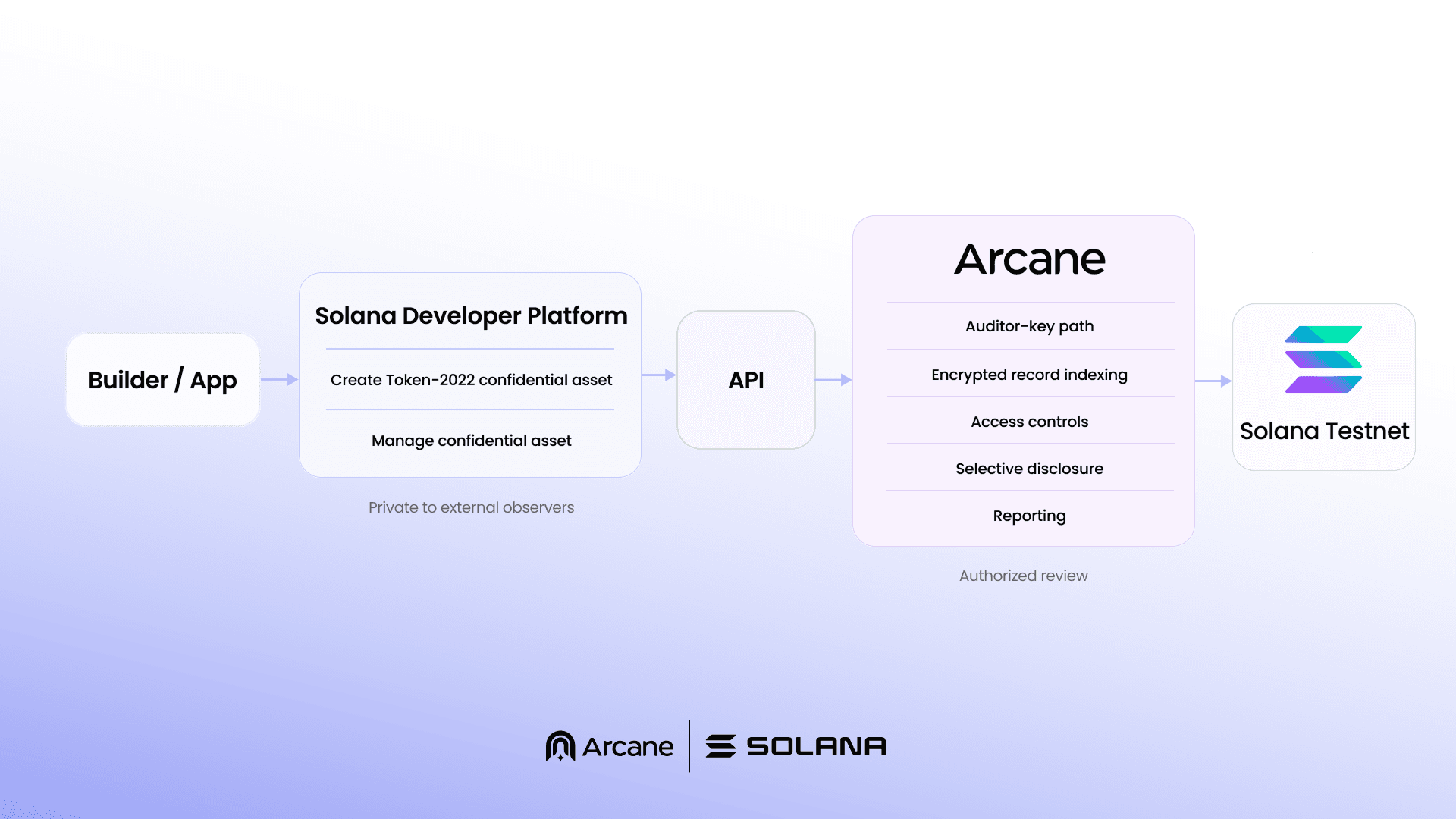
Arcane used the Solana Developer Platform as a base and extended it with a flow for creating Token-2022 confidential assets. The demo connects Solana token creation and management to Arcane's auditability platform through an API integration.
Token-2022 — Solana's Token Extensions program — supports optional token features beyond the original SPL Token program. Its confidential transfer extension lets accounts move tokens without exposing transfer amounts publicly, while still supporting authorized review through a configured auditor key on the mint.
Arcane adds the product layer around that capability. SDP handles creating and managing the confidential Token-2022 asset. Arcane handles the auditor-key path, confidential record indexing, access controls, selective disclosure, and reporting. On-chain primitives make a transfer private. Turning that into something an institution can actually operate takes a workspace for encrypted records, access policies, approval flows, audit trails, and disclosure exports — which is the part Arcane provides.
What you can try right now
The demo runs on Solana testnet. It is built for trying the flow, not for production assets.
In the first version you can:
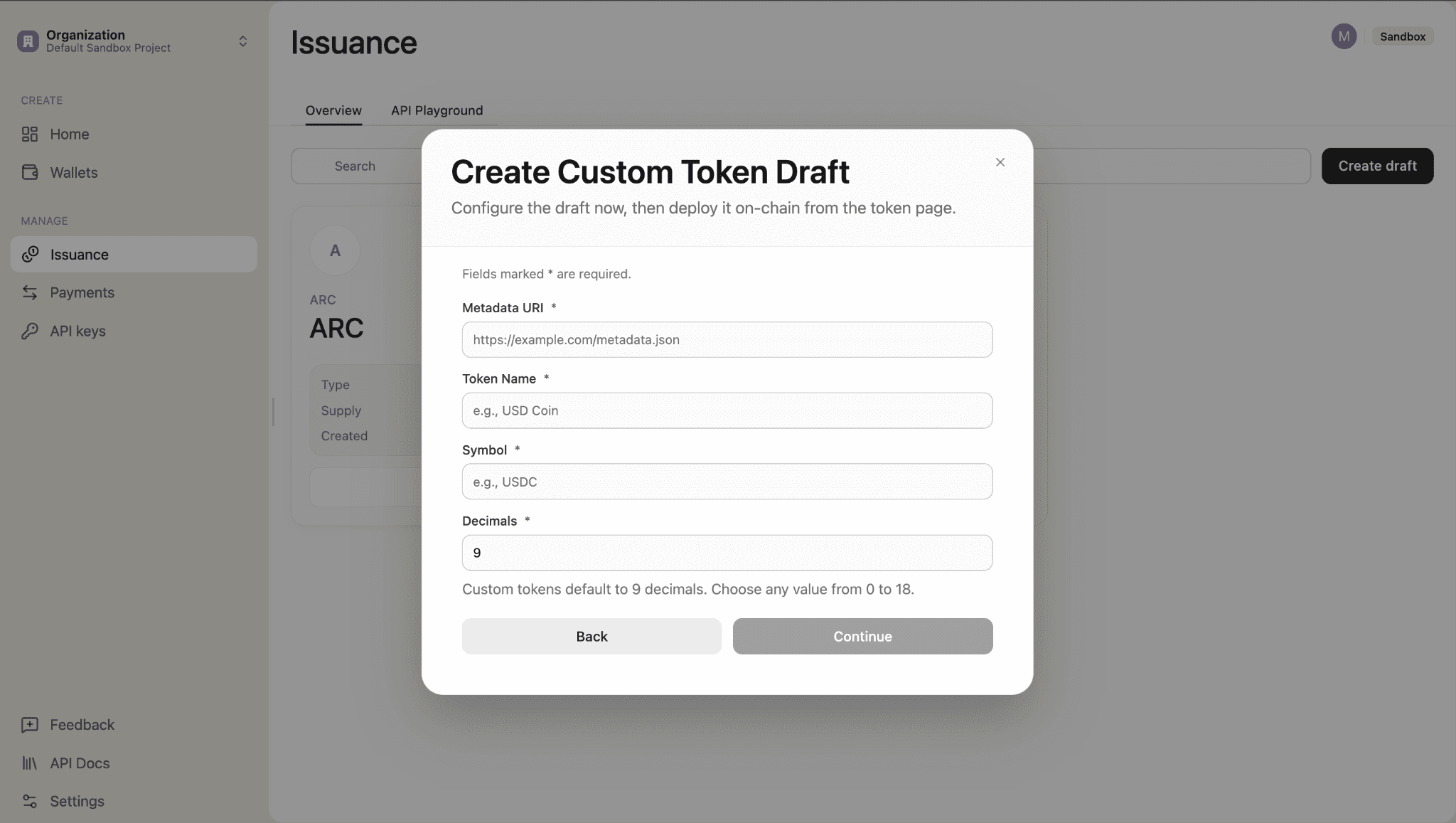
Create a Token-2022 confidential asset on Solana testnet.
Run basic operations with that confidential token.
See how the asset appears inside Arcane's portal, where authorized users can review controlled-disclosure workflows tied to it.
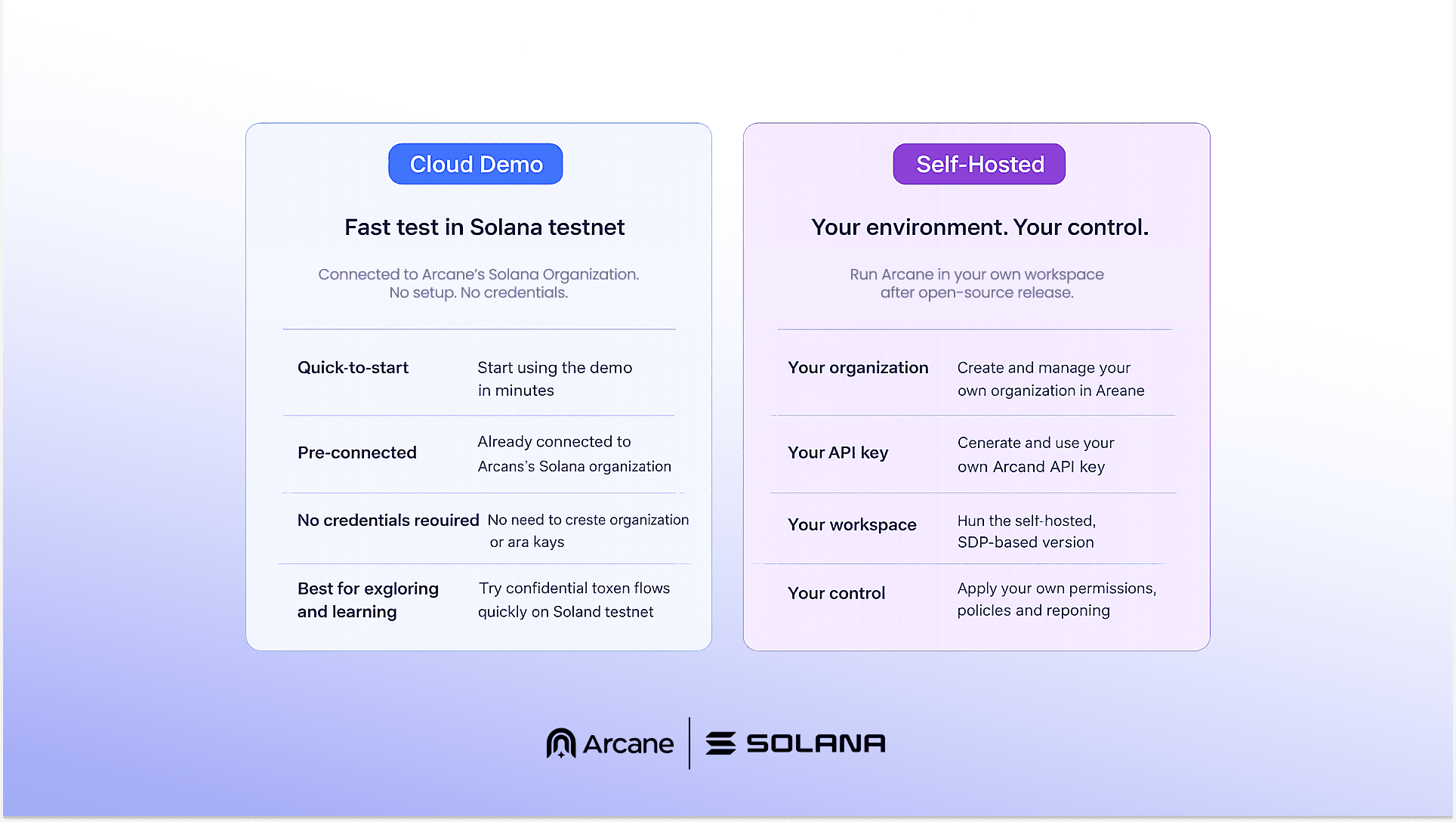
In the current version, Arcane is already connected to Arcane’s Solana organization. That means builders can test the experience right away without creating their own Arcane workspace or configuring their own API credentials.
This setup is a demo environment for learning the confidential-token flow in Solana testnet. Full self-service onboarding for each separate team comes later through the self-hosted path.
The demo also shows why auditability matters in practice. Transfers stay private to external observers, while an authorized user can open a disclosure request in Arcane, define the data scope, set access rules, and route it through an approval process. After approval, that user can view the relevant encrypted transaction records and generate a report for review.
A compliance officer at an RWA platform, for example, could review activity tied to one confidential asset without exposing unrelated token activity to other users or the public.
SDP as the foundation
SDP gives teams a ready application base for token and product workflows — asset issuance, provider configuration, payments, and compliance checks. It is the platform the Solana Foundation positions for enterprise builders, and teams like Mastercard, Worldpay, and Western Union are already building on it.
That made it a natural base for Arcane's first confidential-token demo. Solana builders already understand flows around asset creation, provider configuration, and token management. Rather than starting from low-level cryptography or an SDK, a builder can work through a clear interface, create a confidential asset, and see how Arcane connects auditor keys, encrypted records, access controls, and reporting around it.
The API connection matters too. In the demo, SDP calls Arcane through an API in the same provider-style pattern enterprise teams already expect from B2B software. That makes the flow legible to product teams and protocol engineers alike: product teams can see how confidential tokens might fit payments, treasury, payroll, stablecoins, or regulated assets and engineering teams can inspect the flow and prepare for the self-hosted path.
What's next: a self-hosted path for teams
For teams that want their own configuration, Arcane is preparing a self-hosted route. After the planned open-source release, a team will be able to:
Create an organization in Arcane.
Generate an Arcane API key.
Run the self-hosted, SDP-based version themselves.
Add the API key to their configuration.
Connect their own confidential-token assets to their Arcane workspace.
This keeps the two paths cleanly separated. The cloud demo is the fast way to try confidential tokens on testnet. The self-hosted setup is for teams that need their own workspace, permissions, audit policies, and reporting — a payment company, RWA platform, stablecoin issuer, or treasury product that can't share one environment. Arcane's aim is to make that possible without each team rebuilding the entire confidential-token audit stack from scratch.
Why this matters for confidential tokens on Solana
Solana confidential tokens give builders a real privacy primitive: assets where balances and transfer amounts stay private by default, with an auditor key that preserves authorized review. That primitive can support private payments, treasury workflows, payroll, confidential stablecoin flows, and regulated asset movement — use cases that share one need: the settlement benefits of a public chain without putting sensitive transaction detail in public view.
But a primitive isn't a product. For confidential tokens to see real adoption, builders need a simple way to create an asset, test operations, connect a compliance and audit layer, and see how it would work inside an actual application. Arcane's first demo is the first step in that direction — confidentiality, access control, and reporting in a single flow.
Get started
Open Arcane’s SDP extension and create a confidential asset on Solana testnet.
Follow the planned open-source release for the self-hosted path.
Reach out if you're building confidential-token workflows on Solana — payments, treasury, payroll, stablecoins, or regulated assets — and want your own setup.
This is the first article in a series. Next, we'll walk through creating and operating a confidential token step by step, and go deeper on the disclosure and reporting workflow.
References
Solana Docs — Confidential Transfer: https://solana.com/docs/tokens/extensions/confidential-transfer
Solana Docs — Token Extensions: https://solana.com/docs/tokens/extensions
Solana Developer Platform: https://solana.com/solutions/sdp
Arcane confidential-token demo: https://sdp.arcane.finance